
In food production, cleanliness isn’t optional – it’s survival. One contaminated batch costs you money, reputation, and customer trust. Worse, it puts you at risk of hefty fines and legal liability. But here’s the thing: a mop and bucket won’t cut it. You need professional-grade cleaning equipment that actually sanitises surfaces, eliminates hidden bacteria, and meets regulatory standards.
High-pressure cleaners and steam generators are the gold standard for food facilities. They reach places traditional cleaning can’t touch, eliminate pathogens effectively, and keep your operation compliant.
Why Food Processing Demands Professional Cleaning Equipment
Food contamination spreads fast. Milk, meat, fish, fruits, grains – all are magnets for bacteria and pathogens. A single contaminated surface can compromise an entire production batch. That’s lost revenue, wasted product, and potential legal action.
But contamination isn’t the only risk. Food safety regulators conduct inspections. Failing to maintain proper sanitation standards results in fines, closure orders, or worse. Your cleaning isn’t just about product quality – it’s about staying in business.
That’s where professional cleaning equipment becomes essential. High-pressure cleaners and steam generators deliver the deep, thorough sanitation that regulatory bodies require and your operation depends on.
How High-Pressure Cleaners Work in Food Facilities
A high-pressure cleaner forces water at extreme velocity – typically 100-250 bar – directly onto surfaces. This physical force dislodges stubborn residue, grease, and organic matter that hand-cleaning misses. You can clean machinery crevices, equipment seams, and hard-to-reach corners that harbor bacteria.
The water pressure does the heavy lifting. You don’t need harsh chemicals – the cleaning power comes from pressure alone. For food facilities, this is critical. You want effective sanitation without chemical residues that might contaminate products.
Food-grade high-pressure cleaners often use heated water for even better results. Hot water breaks down grease faster and kills more bacteria than cold water alone. This combination delivers sanitation that meets food safety standards without compromise.
Steam Generators: Chemical-Free Sanitation
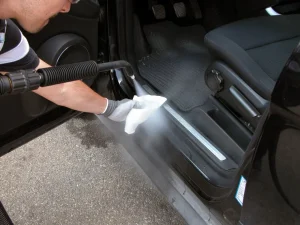
Steam cleaners take a different approach. They heat water to produce high-temperature steam – typically 100-180 degrees Celsius – that’s forced onto surfaces. The heat kills bacteria, viruses, and pathogens on contact. No chemicals needed.
For food processing, this is a game changer. You achieve genuine disinfection without worrying about chemical residues. Your team isn’t exposed to harsh fumes. Your products aren’t at risk from cleaning agent contamination. It’s pure, chemical-free sanitation.
Steam also works on delicate equipment and surfaces where high pressure might cause damage. It’s versatile, effective, and leaves surfaces dry quickly – perfect for food facilities where moisture control matters.
The Real Benefits for Your Food Operation
Here’s what high-pressure and steam cleaning deliver:
• Deep cleaning that reaches hidden spaces where bacteria hide
• Genuine disinfection that eliminates pathogens, not just visible dirt
• Compliance with food safety regulations and inspection standards
• Reduced product loss from contamination-related rejections
• Faster cleaning cycles – finish sanitation in less time
• Better equipment maintenance – removing buildup prevents machinery breakdowns
• Chemical-free sanitation with steam – safer for staff and products
• Peace of mind knowing your facility meets the highest food safety standards
High-Pressure vs Steam: Which Fits Your Facility?
Both are essential for complete food facility sanitation. High-pressure handles heavy grease and stubborn buildup. Steam provides chemical-free disinfection. Most facilities use both:
• High-pressure cleaners for production floors, outer equipment surfaces, and areas with heavy organic buildup
• Steam generators for food contact surfaces, delicate equipment, and final disinfection without chemical residue.
Contact Us
Columbus UK based in Darlington County Durham is your total solution for all types of indoor and outdoor cleaning equipment. We supply high quality industrial cleaning machines to all industries and commercial businesses in mainland Britain, including Newcastle Upon Tyne, Teesside, Durham and Wearside.
Our friendly dedicated team are available to help you with purchasing advice to ensure that have the correct machine for your industrial floor at an affordable and cost effective price. Columbus offers premium services while ensuring affordability for all Industries. We cover all areas from Scotland, North East of England, West Midlands down to London.
Email: info@columbusuk.co.uk
Tel: 01325 371 439
Web: www.columbusuk.co.uk
FAQ
Yes, when used correctly with food-grade equipment and detergents. High pressure removes contaminants, but you must follow food safety guidelines. Always rinse thoroughly after cleaning with food-contact surfaces. Steam is even safer for direct food contact areas.
Depends on your operation and regulatory requirements, but daily cleaning is standard for most food facilities. Some operations require sanitation multiple times per shift. High-pressure and steam equipment makes frequent cleaning faster and more thorough.
Ideally, use both. High-pressure removes buildup. Steam provides heat-based disinfection without chemicals. Together, they deliver complete sanitation. Some facilities prioritise high-pressure for daily cleaning and steam for final disinfection.
Hot water (around 60-80 degrees Celsius) is better than cold for food facilities – it breaks down grease faster and kills more bacteria. Professional food-grade cleaners typically have heated options.
High-temperature steam (above 100 degrees Celsius) kills most pathogens including E. coli, Salmonella, and Listeria. Steam is considered one of the most effective chemical-free sanitation methods for food facilities.