
High-pressure cleaners are powerful, but they have a limit. Water blasts through dirt – that’s great for heavy buildup. But bacteria and biofilm aren’t destroyed by pressure alone. They need heat. A steam generator delivers that heat, turning water into a 180-degree jet that kills pathogens on contact. For food facilities, that’s the diferance between cleaning and true sanitation.
Here’s why steam generators are non-negotiable in modern food production.
How Temperature Kills Bacteria
This is the science that matters: most food-borne pathogens die at temperatures above 75 degrees Celsius. E. coli, Salmonella, Listeria – they can’t survive that heat. A standard high-pressure cleaner uses cold or warm water. It cleans visibel dirt, but pathogens lurking in biofilm and crevices survive.
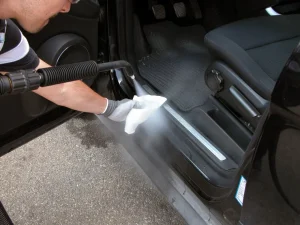
A steam generator pushes the temperature to 180 degrees Celsius. That’s hot enough to instantly kill bacteria, viruses, and spores. You’re not just removing dirt – you’re eliminating the biological threat itself. That’s genuine disinfection, not just surface cleaning.
The gaseous nature of steam is critical too. Unlike a water jet that flows in one direction, steam disperses and rises, reaching into crevices, machinery seams, and difficult-to-access areas where bacteria hide. You get complete coverage with minimal effort.
Biofilm: The Silent Sanitation Problem
Biofilm is a sticky bacterial community that forms on greasy, oily surfaces. It’s resistant to detergents, soaps, and foams. Standard cleaners can’t break through it. But biofilm hates heat. Steam penetrates and destroys it.
This is why food facilities struggle without steam. You can scrub with chemicals all day and still have biofilm lurking on machinery. One piece of contaminated equipment contaminates the next batch of product. A steam generator solves that problem permanently.
The Real Advantages of Steam Cleaning
Here’s what makes steam generators indispensable:
• Reaches everywhere – gaseous steam disperses and penetrates even hidden machinery crevices
• Instant disinfection – 180-degree heat kills pathogens on contact, no wait time
• Surfaces dry immediately – no waiting for air-drying, production can resume right away
• Chemical-free sanitation – no detergent residues, no fumes, safer for staff
• 90% less water usage – dramatically lower water bills and disposal costs
• 95% reduction in detergent use – fewer chemicals means lower operating costs
• Multiple daily cleaning cycles – fast sanitation allows frequent cleaning without disrupting production
• Versatile – works on all machinery, food contact surfaces, and production areas
Why Steam Beats Traditional Detergent Cleaning
Detergents and foams clean surfaces, but they don’t reliably kill pathogens – especially not biofilm. They also leave residues that need rinsing. Chemical detergents are harsh on equipment, staff, and the environment. You need ventilation. You need safety protocols. You need disposal procedures.
Steam does it all: cleans, disinfects, and leaves zero residue. No fumes. No chemical safety concerns. No disposal headaches. Just heat that works.
Speed Matters in Food Production
In food manufacturing, every minute of downtime costs money. With traditional cleaning, you rinse, scrub, apply detergent, rinse again, wait for drying. That’s hours lost per shift. A steam generator cuts through that. Sanitization happens in minutes. Surfaces dry instantly. Your production line keeps moving.
For facilities that clean multiple times per day – which is standard in meat processing, dairy, and fish production – steam generators aren’t a luxury. They’re essential infrastructure.
Choosing the Right Steam Generator
Not all steam generators are created equal. Look for models that reach at least 180 degrees Celsius and deliver consistent pressure – ideally 8-10 bar. Stainless steel construction is critical for food facilities (easier to clean, more durable). Fast heat-up time matters too – you don’t want to wait 20 minutes for a generator to reach working temperature.
Quality generators include multiple accessories – different nozzle attachments, extension hoses, and brush heads – so you can tackle every cleaning scenario. An intuitive control panel means your staff learns quickly without extensive training.
Size matters too. Small laboratories need compact, portable models. Large production plants need robust, high-capacity units that can handle frequent, heavy use.
Contact Us
Columbus UK based in Darlington County Durham is your total solution for all types of indoor and outdoor cleaning equipment. We supply high quality industrial cleaning machines to all industries and commercial businesses in mainland Britain, including Newcastle Upon Tyne, Teesside, Durham and Wearside.
Our friendly dedicated team are available to help you with purchasing advice to ensure that have the correct machine for your industrial floor at an affordable and cost effective price. Columbus offers premium services while ensuring affordability for all Industries. We cover all areas from Scotland, North East of England, West Midlands down to London.
Email: info@columbusuk.co.uk
Tel: 01325 371 439
Web: www.columbusuk.co.uk