Columbus UK, Darlington Office Based
Floor Scrubber vs Pressure Washer: What’s Best for Businesses? (2026)
Comparison Overview
Choosing between a floor scrubber and a pressure washer is a common dilemma for facility managers. Both machines clean floors effectively, but they work very differently and excel in different situations. Using the wrong one wastes time, money, and can even damage surfaces.
This head-to-head comparison will help you decide exactly which machine (or combination) is right for your business in 2026.
How They Work – The Fundamental Difference
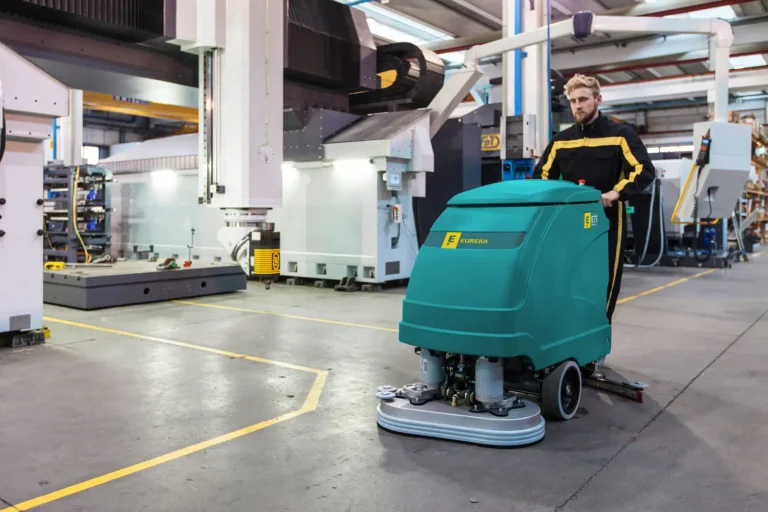
Floor Scrubber: A purpose-built machine that simultaneously scrubs, vacuums, and dries the floor in one pass. It applies cleaning solution, agitates with brushes or pads, then sucks dirty water into a recovery tank, leaving the floor almost instantly walkable and streak-free.
Pressure Washer: Delivers a high-pressure jet of water (hot or cold) to blast away dirt, grease, and stains. It cleans aggressively but leaves the floor wet, often requiring separate sweeping, rinsing, and drying steps.
Detailed Comparison Table: Floor Scrubber vs Pressure Washer (2026)
| Factor | Floor Scrubber | Pressure Washer | Winner for Most Businesses |
|---|---|---|---|
| Cleaning Method | Scrub + vacuum + dry in one pass | High-pressure blast only | Scrubber |
| Best Surfaces | Sealed concrete, epoxy, vinyl, tile, terrazzo | Concrete, tarmac, block paving, outdoor stone | Depends on surface |
| Indoor Use | Excellent – quiet, controlled, no overspray | Poor – creates mess, slippery floors, overspray | Scrubber |
| Outdoor Use | Good on smooth paved areas (with all-terrain models) | Excellent – handles rough surfaces & heavy soiling | Pressure Washer |
| Speed (Productivity) | Very high on large flat areas (up to 100,000 sq ft/hr) | Medium – requires multiple steps | Scrubber |
| Drying Time | Almost immediate (floor ready in minutes) | Long – floors can stay wet for hours | Scrubber |
| Labour Savings | High (one operator, one pass) | Lower (multiple steps needed) | Scrubber |
| Chemical Usage | Low to moderate (can use eco options) | Often higher (needs detergents for grease) | Scrubber |
| Water Usage | Very efficient (recycling options available) | High consumption | Scrubber |
| Initial Cost | £8,000 – £45,000+ (ride-on) | £500 – £5,000 (commercial models) | Pressure Washer |
| Best For | Warehouses, factories, supermarkets, hospitals | Loading docks, car parks, forecourts, outdoor yards | Scrubber for indoors |
When to Choose a Floor Scrubber (Recommended for Most Indoor Businesses)
Choose a floor scrubber if you:
Clean large indoor floor areas regularly (warehouses, distribution centres, retail stores, food production)
Need the floor back in use quickly (safety & productivity)
Want consistent, professional results with minimal operator skill
Value water and chemical efficiency
Operate in environments where slip hazards must be minimised
Top 2026 Recommendation: Ride-on models like Advance SC6500 or Tennant T7 for areas over 30,000 sq ft.
The Smartest Strategy for Most Businesses in 2026
Don’t choose one or the other — use both for best results:
Daily/Weekly maintenance — Floor scrubber (keeps indoor floors clean, dry, and safe)
Periodic deep cleans — Pressure washer (for heavy soil, edges, corners, and outdoor areas)
Hybrid approach — Many warehouses buy a good ride-on scrubber and hire a powerful pressure washer only when needed.
This combination typically delivers the fastest ROI and the cleanest overall facility.
Cost & ROI Reality Check
A good ride-on floor scrubber often pays for itself in 6–12 months through labour savings alone in medium-to-large facilities.
A pressure washer has a lower entry price but usually requires more total labour hours, reducing long-term savings.
Bottom Line: For most indoor commercial and industrial businesses, a floor scrubber is the better long-term investment. Pressure washers are excellent as a complementary tool for tough outdoor or deep-clean jobs.
Not sure which machine is right for your specific floors and dirt challenges?
Share your facility size, floor type, and main cleaning problems — we’ll give you a clear recommendation with current 2026 pricing and options.