Columbus UK, Darlington Office Based

Manual Cleaning vs Machine Cleaning for Warehouses (Cost Breakdown 2026)
Comparison Overview
If you’re still cleaning a warehouse larger than 20,000 sq ft with mops, buckets, and manual sweepers, you’re probably losing thousands of pounds every month in labour costs and productivity.
This 2026 cost breakdown shows the real difference between manual cleaning and machine cleaning — with clear numbers so you can calculate your own potential savings.
The Reality Check: Manual Cleaning Is Extremely Expensive
Manual warehouse cleaning typically involves:
Multiple staff pushing large mops or using push sweepers
Frequent bucket changes and water refills
Separate sweeping + mopping passes
Long drying times (floors out of action for hours)
High risk of slips and inconsistent results
Side-by-Side Cost Comparison (Realistic 2026 UK/EU Figures)
Assume a 60,000 sq ft warehouse cleaned 5 days per week.
| Metric | Manual Cleaning (Mops & Buckets) | Machine Cleaning (Ride-on Scrubber) | Annual Savings with Machine |
|---|---|---|---|
| Time to Clean | 6–8 hours per day | 1–1.5 hours per day | ~5–7 hours/day saved |
| Labour Hours per Year | 1,560 – 2,080 hours | 260 – 390 hours | 1,300 – 1,690 hours |
| Labour Cost (@ £18/hr incl. on-costs) | £28,080 – £37,440 | £4,680 – £7,020 | £23,400 – £30,420 |
| Cleaning Consumables | £2,800 – £4,200 (mops, detergents, water) | £1,200 – £2,100 (pads, brushes, solution) | £1,600 – £2,100 |
| Equipment Cost (amortised) | £800 (mops, buckets, trolleys) | £6,000 – £9,000 (machine + maintenance) | Machine pays for itself |
| Total Annual Cost | £31,680 – £42,440 | £11,880 – £18,120 | £19,800 – £24,320 |
| Payback Period | N/A | 6–11 months | — |
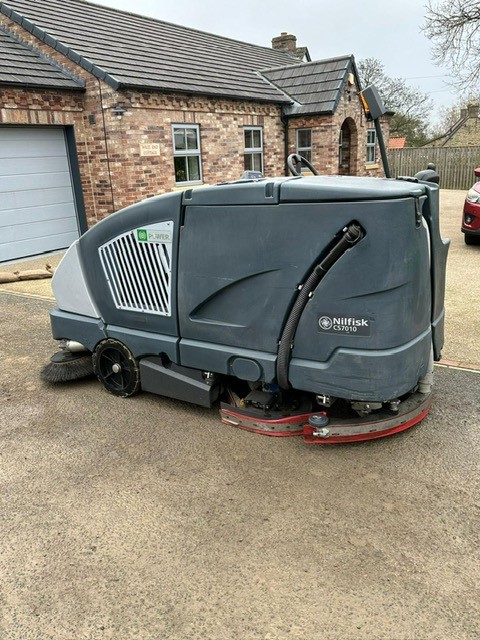
Productivity Comparison of Cleaning Machines
Manual: One person can realistically clean and dry ~8,000–12,000 sq ft per hour (including breaks and water changes).
Ride-on Machine: One operator can clean 60,000–100,000+ sq ft per hour (depending on model and floor condition).
This means what used to take an entire shift (or multiple staff) can now be done before the first coffee break.
Hidden Costs of Manual Cleaning Most Warehouses Ignore
Downtime — Floors stay wet for 1–3 hours → lost picking/packing time.
Inconsistent Results — Tyre marks, dust, and spills often remain.
Staff Turnover & Injury — Back strain, slips, and repetitive work lead to higher absenteeism.
Water & Chemical Waste — Manual methods use far more water and detergent.
Health & Safety Compliance — Harder to prove due diligence with manual records.
Machine cleaning addresses all of these issues while delivering visibly better, drier, and safer floors.
When Manual Cleaning Still Makes Sense (2026)
Manual cleaning can still be appropriate if:
Your warehouse is very small (<10,000 sq ft)
Cleaning is infrequent (once per week or less)
Budget is extremely tight and you only need spot cleaning
You have highly cluttered or specialised areas that machines can’t reach
Even then, a small walk-behind scrubber is usually a better investment than pure manual methods.
Real ROI Examples from 2026
Medium Warehouse (40,000 sq ft): Ride-on scrubber payback in 7 months.
Large Distribution Centre (120,000 sq ft): Payback in 4–6 months + major labour reallocation benefits.
Multi-shift Operation: Savings multiply — many sites reduce from 3 cleaning staff to 1.
Pro Tip: The labour you free up can be reassigned to higher-value tasks (picking, packing, inventory) rather than mopping — turning a cost centre into a productivity win.