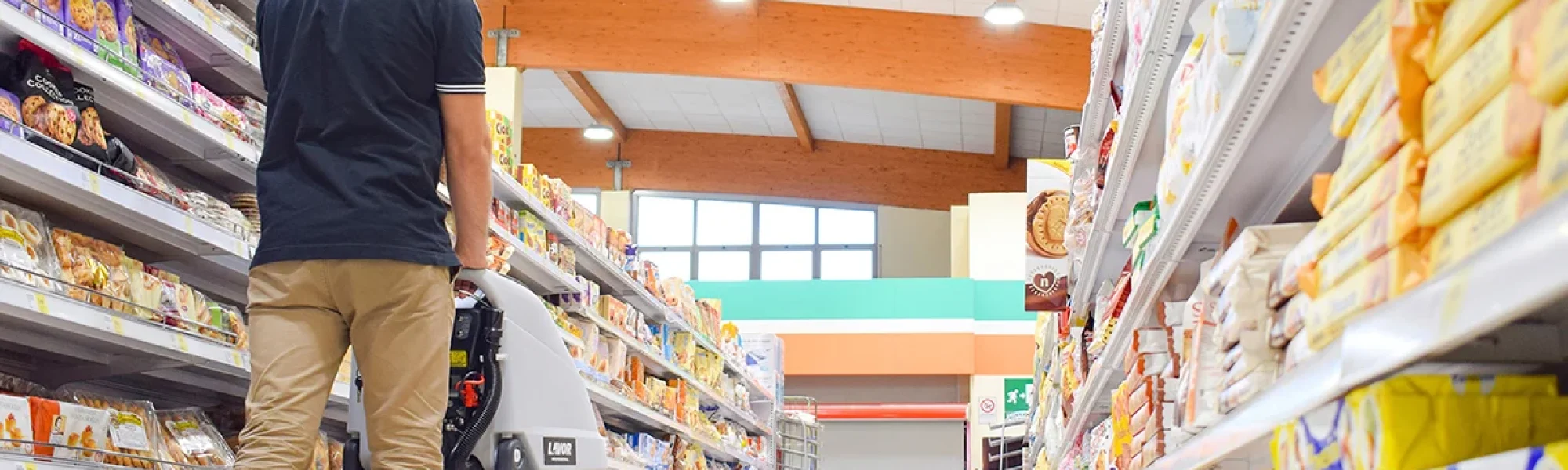
High-traffic areas present unique cleaning challenges. Constant foot traffic creates heavy soiling. Debris and dirt accumulate quickly. Regular cleaning never quite catches up. Standard equipment struggles under the demand. You need machines designed specifically for high-traffic environments—durable, fast, and efficient enough to keep up with relentless usage. The right equipment makes the difference between facilities that look professionally maintained and those that look perpetually dirty.
Understanding High-Traffic Area Cleaning Demands
High-traffic areas—retail floors, warehouse entrances, production facility thoroughfares, hospital corridors—face cleaning demands that exceed normal commercial cleaning. Dirt loads are heavy.
Clean-up cycles are frequent. Downtime is costly. Standard walk-behind scrubbers can’t handle the pace. They’re too slow. They require constant operator attention. They can’t work autonomously during off-hours when traffic is lower. Retail environments especially demand machines that work while customers are present or during brief closing windows.
A supermarket might have only 2-3 hours for overnight cleaning. That’s not much time to clean thousands of square meters. Warehouses face similar pressure. Loading and unloading operations create constant dirt. The sooner floors are clean, the sooner operations resume. Slow cleaning costs money. High-traffic facilities also experience uneven wear.
Paths worn by constant foot traffic become dull and stained while surrounding areas stay relatively clean. Standard cleaning misses this problem. Professional equipment reaches into these high-wear zones and restores them. Speed matters. Cost-effectiveness matters. Durability matters. Equipment designed for normal commercial use will fail quickly under high-traffic demands. You need machines built for this intensity.
Ride-On Scrubbers: The Workhorse for Large Areas
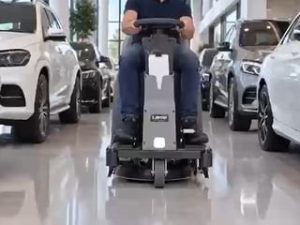
Ride-on floor scrubbers are the standard solution for high-traffic areas. They’re fast—covering 12,000+ square meters per shift. They’re powerful—delivering deep cleaning results. They’re durable—built to withstand constant use.
One operator handles what would require three people with traditional mops. The economics are compelling. Labour savings alone justify the investment within months. For retail and warehouse environments, ride-on scrubbers are essential, not luxury. Modern machines include features specifically designed for high-traffic demands. Battery-powered options eliminate fuel/charging downtime. Adjustable brush pressure lets operators optimize for different floor conditions. Large water tanks mean fewer refills during shifts. Quick-change brushes simplify maintenance. Intuitive controls mean new operators learn quickly.
Many high-traffic facilities use multiple machines for redundancy. If one breaks down, others continue operating. This prevents the scenario where a broken scrubber shuts down cleaning entirely. For facilities operating 24/7, redundancy isn’t optional—it’s essential.
High-Pressure Cleaners: Tackling Stubborn Build-up
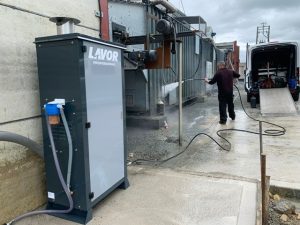
Scrubbers handle routine cleaning, but high-traffic areas accumulate stubborn build-up that requires pressure cleaning. Entrances where customers track in dirt. Loading zones where dust settles into floor crevices. Production areas where grease and grime bond to surfaces. Regular scrubbing doesn’t remove this build-up. Pressure cleaning does. High-pressure cleaners operate between 100-250 bar, with water pressure alone doing much of the work. No harsh chemicals needed. The physical force of pressurized water removes ingrained dirt that traditional methods miss.
Heated water options (60-80 degrees Celsius) improve performance on greasy or sticky residues. Steam-pressure combinations deliver even better results. For facilities that want to maintain floor appearance and functionality, periodic pressure cleaning (monthly or quarterly) combined with regular scrubbing is the proven approach. Routine scrubbing keeps daily dirt manageable. Periodic pressure cleaning removes stubborn build-up before it becomes unmanageable. This two-pronged approach is more cost-effective than trying to handle everything with scrubbers alone.
Mechanical Sweepers: Efficient Pre-Cleaning
Many facilities overlook mechanical sweepers, but they’re essential in high-traffic environments. Pre-cleaning with a sweeper removes loose debris, dust, and pollen before wet cleaning. This dramatically reduces the workload for scrubbers and pressure cleaners. Faster overall cleaning cycles. Better results because wet cleaning focuses on actually cleaning, not just moving debris around.
For facilities with outdoor areas feeding into indoor spaces, sweepers handle the dirt before it becomes a wet-cleaning problem. Ride-on mechanical sweepers are particularly valuable in high-traffic settings because they’re fast and autonomous. One operator covers ground quickly. Some models work overnight without supervision, further reducing daytime disruption. For large retail or warehouse environments, adding a mechanical sweeper to your cleaning routine pays for itself through faster, more efficient overall cleaning.
Choosing Equipment for Your High-Traffic Facility
The best equipment combination depends on your specific situation. For most high-traffic facilities, ride-on scrubbers are the foundation. They handle routine cleaning efficiently. Periodic pressure cleaning (monthly or quarterly) removes build-up. Adding mechanical sweepers pre-cleans and reduces overall cleaning time. For very heavy traffic areas—high-volume retail, major warehouse hubs—consider redundancy. Multiple scrubbers ensure continued operation if one needs maintenance. Steam generators add chemical-free sanitation capability.
For food facilities or healthcare, steam is often essential. Labour considerations matter. Equipment that reduces labour intensity is particularly valuable when finding good staff is difficult. Modern equipment with intuitive controls simplifies training and eases operator turnover. ROI calculation is straightforward.
Calculate your current cleaning costs (labour, chemicals, equipment maintenance). Compare to the cost of professional equipment. Most facilities recover equipment investment within 12-18 months through labour and chemical savings. Columbus UK helps high-traffic facilities select equipment that matches their specific needs and constraints. We understand the demands of retail, warehouse, and production environments. We stock equipment designed for intensive use. We arrange demonstrations so you can see how machines perform on your actual floors.
Making the right choice for high-traffic cleaning isn’t complicated. It’s about understanding demands, selecting appropriate equipment, and implementing intelligent cleaning schedules. Facilities that do this successfully maintain professional appearance, improve operational efficiency, and significantly reduce cleaning costs.
Contact Us
Columbus UK, based in Darlington, County Durham, is your total solution for all types of indoor and outdoor cleaning equipment. We supply high-quality industrial cleaning machines to all industries and commercial businesses across mainland Britain.
Our friendly, dedicated team provides expert purchasing advice, professional installation, servicing, and repair support to ensure you have the correct machine for your application at an affordable and cost-effective price.
We cover all areas from Scotland and the North East of England through the West Midlands and down to London, with mobile service and repair support available nationwide.
📧 Email: info@columbusuk.co.uk
📞 Tel: 01325 371 439
🌐 Web: columbusuk.co.uk